Showing posts with label Birds. Show all posts

Sunday, February 3, 2013

Bird Watch: Bhigwan

Wildlife photography is not my area, but I never miss a chance to visit places where one gets to see the wonderful animals in their natural habitat. It is truly a  refreshing and awarding experience. One such place I visited recently is Bhigwan. 

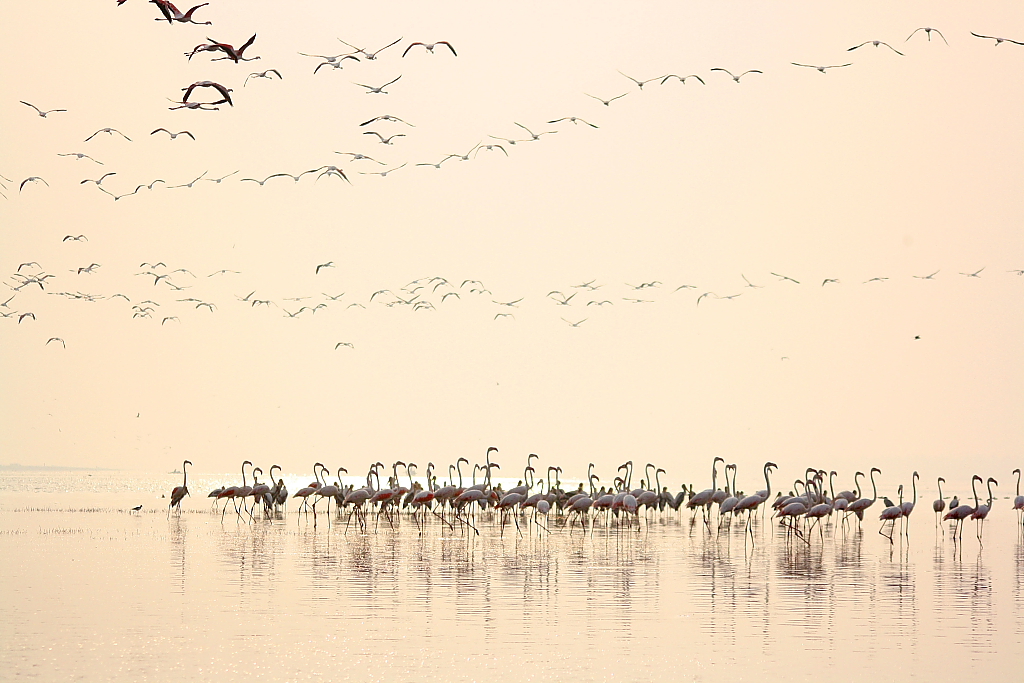
Bhigwan is a small village on the Pune-Solapur highway, some 100 kms from Pune. The catchment area of the Ujjani dam build on the river Bhima hosts a number of migratory birds from all over the world. Most popular among them is the Flamingo. The other notable bird which we spotted was the Bar-headed goose. It is the highest flying bird in the world and flies above the Mt. Everest during its migration.

There were many other bird varieties we spotted, the ones which I remember are the painted stork, reddy-shell ducks, open billed stork, black ibis, glossy ibis, terns, black-winged stilt, ring-billed gulls, herons, egrets, plover, sandpiper. 

Greater Flamingo


Greater Flamingo (Juvenile)


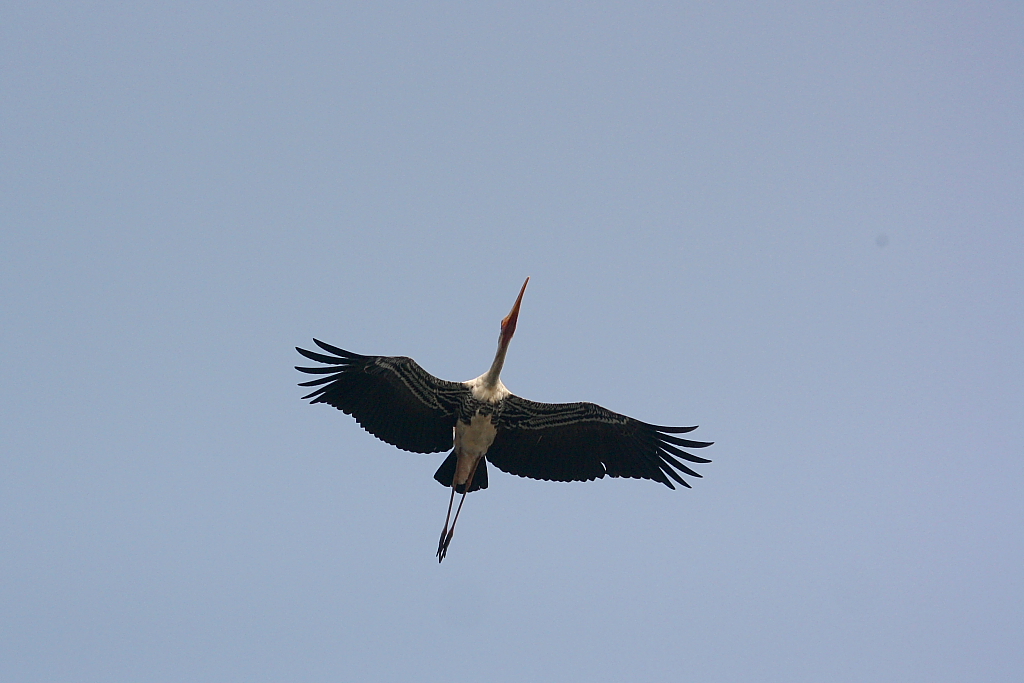
Painted Stork

Painted Stork

Painted Stork


Bar-heade geese

Bar-headed geese

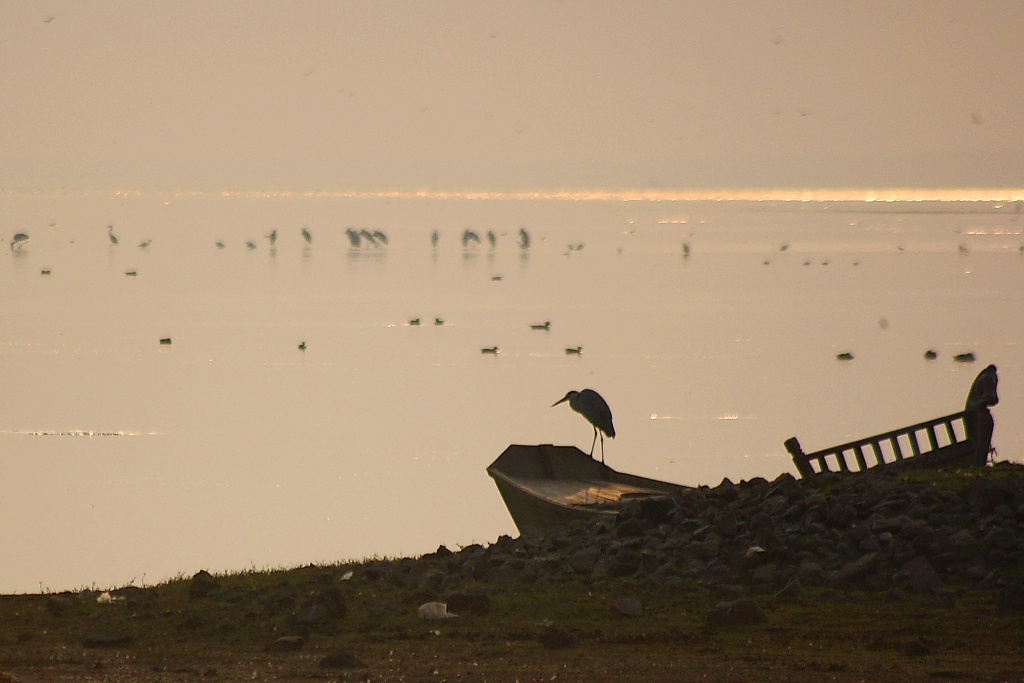
Pond Heron

Black-headed Ibis

Open-billed Stork

Ring-billed gull


Friday, April 1, 2011

The Painted Stork


The Painted Stork is a large bird of the Stork family. It is found in wetlands of the plains of tropical Asia, south of Himalaya. They nest in large numbers along with other waterbirds like cormorants and egrets. The nest is a large stick platform with a shallow central depression lined with stems and leaves of water weeds. It is built in trees standing in or near water. These birds are not migratory but travel short distances for food and water.

I got a chance to visit a large colony of Painted Storks during a recent trip to Bhigwan. The village of Bhigwan is situated on the banks of Bhima river and is popular amongst birds. This place is famous for Flamingos which migrate here from Siberia and other regions during the winter season. We could not spot the flamingos but did have a wonderful time spotting other birds specially the colony of Painted Stork.
We are thankful to Maruti kaka - a retired forest official for showing us around.


Tuesday, November 23, 2010

Birds @ Kavdi


White Breasted Kingfisher


Black Winged Stilt


Spot Billed Duck & Common Shell Duck


Marsh Sandpiper


Paddyfield Pipit


White Wagtail


Sparrows


ID: The Book of Indian Birds- Dr Salim Ali.

Thursday, May 20, 2010

Pashan Lake: Dedicated to my friends

Yesterday was the last official day at the department for the batch of MSc-II (2008-10). After spending some time at the department we a group of around 18 people decided to spend some time a the pashan lake nearby. I had never visited this place before. After much efforts we reached the lake (its always an effort to move 18 people from one place to another).


The place was beautiful. The sights of the birds , the man fishing in the backdrop of hills, and the sunset were the ones we enjoyed.


After spending some time enjoying these peaceful moments and after some group photos we decided to leave as it was getting dark. Later that evening we were together till 1:00 am at night and had a blast.


I will really miss you guys. Hope we will be in contact in the future. All the Best to all of you..

Tuesday, March 16, 2010

Birds at Kavdi - Visit No. 2

I visited kavdi again last month along with my friend Hershal. Here are snaps of some of the birds along with their description.

White Wagtail


This is an insectivorous bird of open country, often near habitation and water. It prefers bare areas for feeding, where it can see and pursue its prey. In urban areas it has adapted to foraging on paved areas such as car parks.
It nests in crevices in stone walls and similar natural and man-made structures. This is a slender bird, 16.5–19 cm (6½–7½ in) in length, with the characteristic long, constantly wagging tail of its genus.
This species breeds throughout Eurasia up to latitudes 75°N, only being absent in the Artic from areas where the July isotherm is less than 4°oC. It also breeds in the mountains of Morocco and western Alaska. It occupies a wide range of habitats, but is absent from deserts. (Source: Wikipedia)


Grey Wagtail
The Grey Wagtail (Motacilla cinerea) is a small member of the wagtail family, Motacillidae. The species looks similar to the Yellow Wagtail but has the yellow on its underside restricted to the throat and vent. Breeding males have a black throat. The species is widely distributed, with several populations breeding in Europe and Asia and migrating to tropical regions in Asia and Africa. They are usually seen on open marshy ground or meadows where they walk solitarily or in pairs along the ground, capturing insects that are disturbed. Like other wagtails, they frequently wag their tail and fly low with undulations and they have a sharp call that is often given in flight. (Source: Wikipedia)


Wire Tailed Swallow
This bird is found in open country near water and human habitation. Wire-tailed Swallows are fast flyers and they generally feed on insects, especially flies, while airborne. They are typically seen low over water, with which they are more closely associated than most swallows.
The neat half-bowl nests are lined with mud collected in the swallows' beaks. They are placed on vertical surfaces near water under cliff ledges or more commonly on man-made structures such as buildings and bridges.
This striking species is a small swallow at 14 cm in length. It has bright blue upperparts, except for a chestnut crown and white spots on the tail. The underparts are white, with darker flight feathers. There is a blue mask through the eye.
This species gets its name from the very long filamentous outermost tail feathers, which trail behind like two wires. Sexes manifest similar appearances, but the female has shorter "wires". Juveniles have a brown crown, back and tail. The Asian form, H. s. filifera, is larger and longer-tailed than the abundant African H. s. smithii.
The scientific name of this bird is after Professor Chetien Smith, a Norwegian botanist, who was a member of the British expedition to the Congo River in 1816, led by James Kingston Tuckey. (Source: Wikipedia)